
Help Us Build a First-of-Its-Kind Mobile Response Unit for Exploited and Trafficked Children
A child has been rescued. What happens next matters.
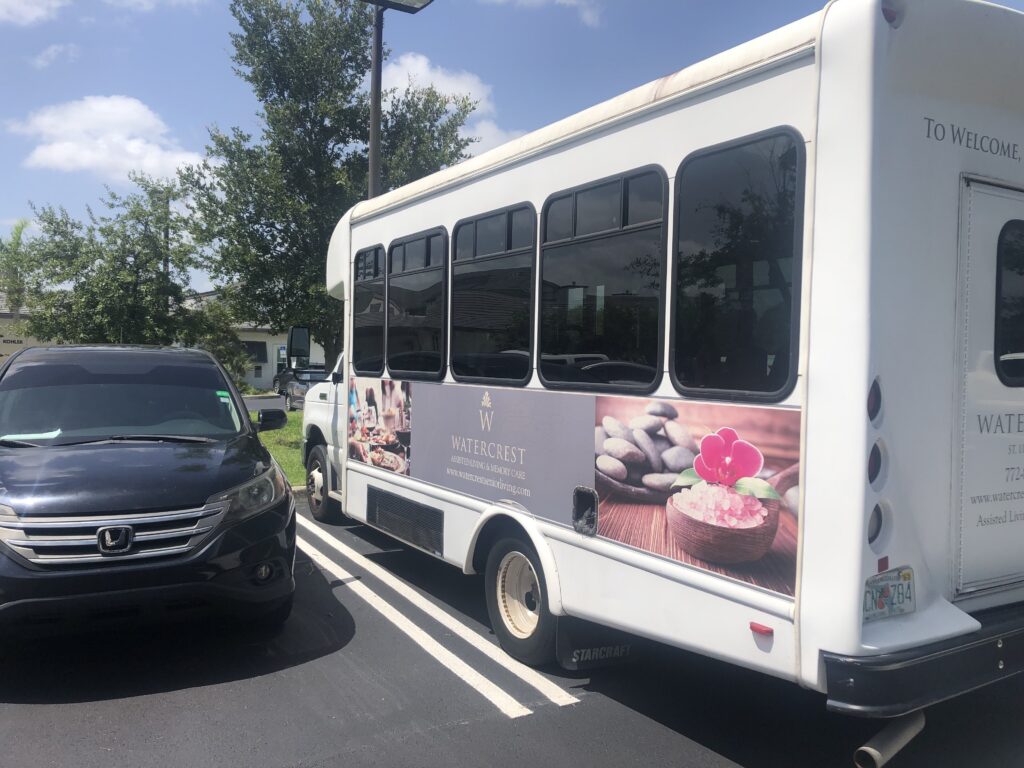
U-ACT has been given an extraordinary gift: a donated bus with the potential to become an entirely new tool for child-rescue operations.
Now we need your help to build it.
U-ACT is transforming this vehicle into a Mobile Response Unit a first-of-its-kind prototype designed to provide exploited and trafficked children with a private, trauma-informed soft-landing environment during law enforcement rescue operations.
The prototype is being developed for use in Florida’s 19th Judicial Circuit in coordination with law enforcement, Homeland Security partners and the State Attorney’s Office.
CAMPAIGN GOAL: $78,000
THE FIRST MOMENTS AFTER RESCUE MATTER
When law enforcement removes a child from an exploitative or trafficking situation, the rescue itself is only the beginning.
The child may be frightened, confused, exhausted or overwhelmed. Yet those first hours can also be critically important to investigators working to understand what happened, identify offenders and preserve information that may help build a case.
Traditional environments were not necessarily designed around the psychological needs of a traumatized child.
We believe there is a better way.
Instead of immediately placing a rescued child into another unfamiliar, institutional environment, the U-ACT Mobile Response Unit will bring a thoughtfully designed space closer to the rescue operation.
A place to feel safe.
A place to begin talking.
A place where trained professionals can do their work while protecting the dignity of the child in front of them.
A SOFT LANDING IN A VERY HARD MOMENT
This is not simply a remodeled bus.
Every part of the environment is being considered through the lens of a child who has just experienced trauma.
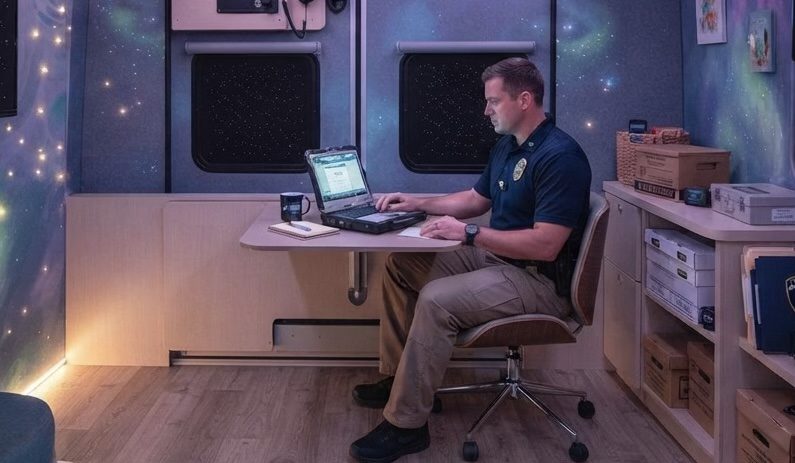
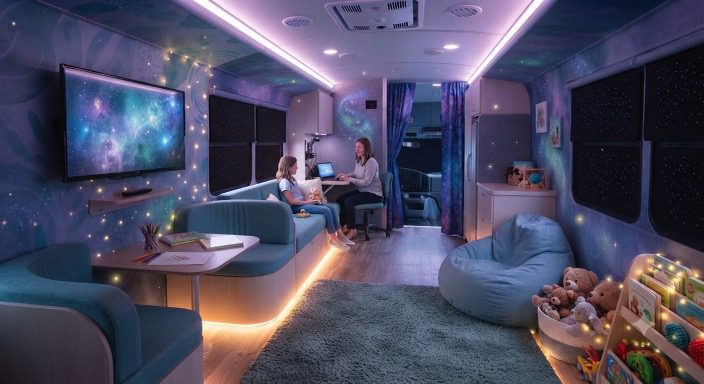
The unit will incorporate a carefully controlled sensory environment using elements such as:
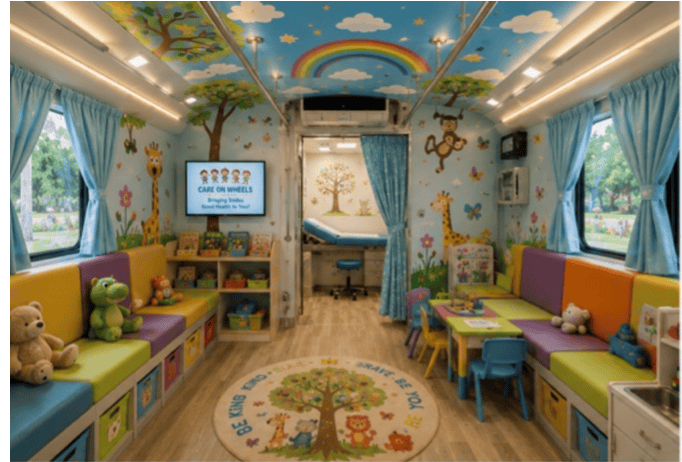
Color designed to create warmth rather than an institutional feeling.
Lighting that is calm, adjustable and non-clinical.
Sound and music that can help create a quieter, less intimidating atmosphere.
Comfortable furnishings and textures that replace the feeling of an interview room with a space designed around safety.
Thoughtful sensory elements, including scent where appropriate, selected to help create a welcoming environment without overwhelming the child.
Privacy that allows sensitive conversations to occur away from crowds, public spaces and the activity surrounding an operation.
The goal is simple:
Create the conditions where a child can begin to feel safe enough to communicate.
That can support trauma-informed interviewing, help investigators gather critical information more effectively and begin restoring something trafficking has taken from the child: a sense of safety.
DESIGNED FOR THE CHILD. BUILT FOR THE MISSION.
The Mobile Response Unit is being developed to serve two needs at the same time.
FOR THE CHILD
A private, calm and thoughtfully designed environment where an exploited or trafficked child can decompress after rescue and interact with trained professionals without the unnecessary stress of a traditional institutional setting.
FOR LAW ENFORCEMENT
A mobile resource that can accompany rescue operations and provide investigators and forensic interview professionals with an environment specifically designed to support trauma-informed communication and the preservation of critical information.
This is where survivor-centered care and investigative effectiveness meet.
A PROTOTYPE THAT COULD CHANGE THE RESPONSE
U-ACT is not purchasing an off-the-shelf solution.
We are building the proof of concept.
This first unit will be designed, built, deployed and evaluated in Florida’s 19th Judicial Circuit with the professionals who will actually use it.
The prototype is planned for deployment in future child-trafficking enforcement operations so that law enforcement, forensic interview specialists and U-ACT partners can evaluate how the environment performs under real-world conditions.
Their experience will help refine the design.
What works will be strengthened.
What needs improvement will be changed.
And what is learned from this first unit can help establish a model for what comes next.
This bus is the beginning.
WHY THE 19TH JUDICIAL CIRCUIT?
Florida’s 19th Judicial Circuit covers four counties and an expansive geographic area.
Distance matters.
During multi-agency investigations and rescue operations, transporting a vulnerable child away from the operation can consume valuable time and resources while placing another burden on a child who may already be in crisis.
A deployable soft-landing unit brings the environment closer to where the child is rescued.
That means less unnecessary movement.
More privacy.
Better continuity for investigators.
And a response designed around the needs of the child.
WHAT YOUR SUPPORT WILL BUILD
The bus has already been donated.
Now we have to transform it.
The $78,000 Build the Bus Campaign will help take the vehicle from an empty platform to an operational prototype prepared for child-rescue missions.
The build-out is expected to include the trauma-informed interior design, furnishings, privacy solutions, sensory environment, technology, communications, electrical and lighting needs, safety improvements, secure equipment solutions and other modifications required to prepare the unit for field deployment.
Every contribution moves another piece of the project forward.
$78,000
ONE PROTOTYPE. ONE MISSION. A NEW WAY TO RESPOND.
THIS IS MORE THAN A BUS
For a child who has just been rescued, it can be a place where the chaos stops.
For investigators, it can be a purpose-built environment in which critical conversations can happen.
For the 19th Judicial Circuit, it can become a new resource in the fight against child exploitation and trafficking.
And if this prototype proves what we believe it can do, its impact may reach far beyond one vehicle and one district.